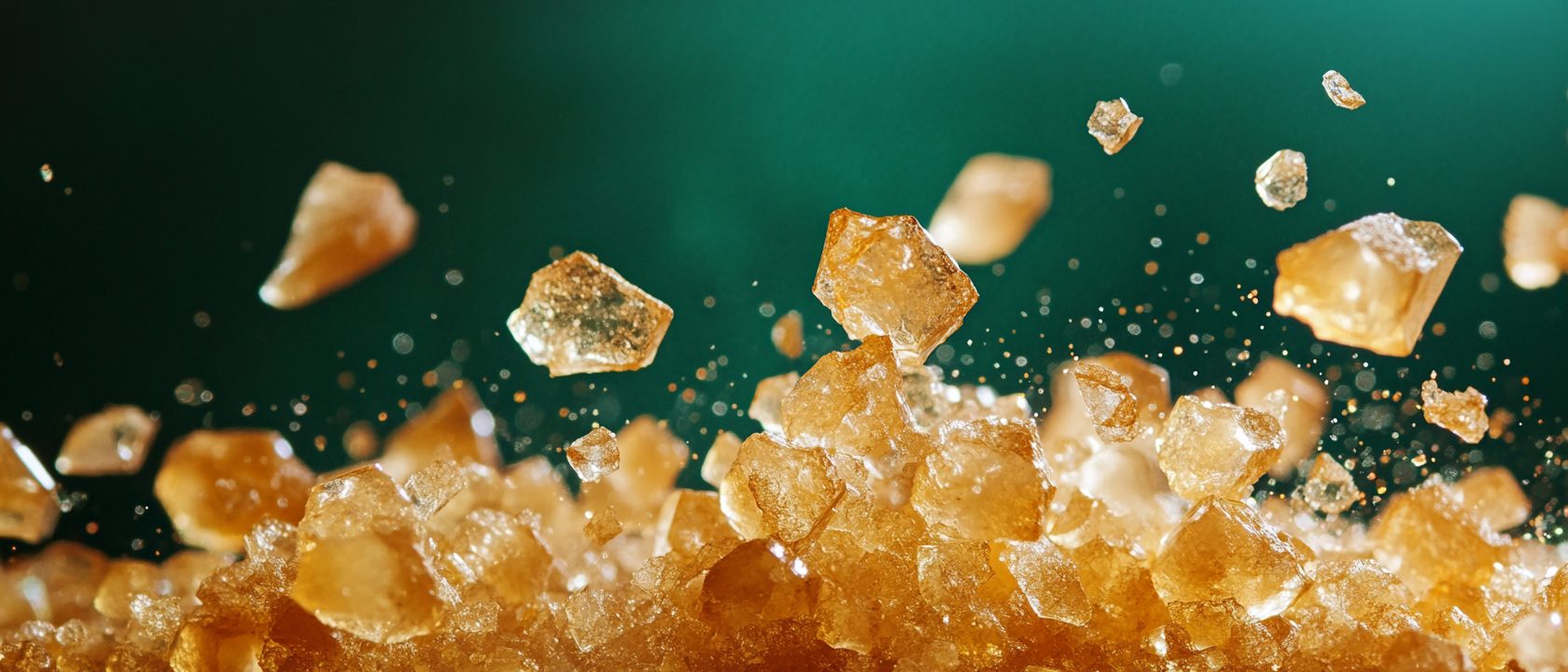
The product
Dry cellulose granules — the reservoir before water.
Patented cellulose water-retention polymer
Canosis is a biodegradable cellulose polymer that holds water in the soil, releases it as the plant needs it, and recharges on the next watering cycle.
How it works
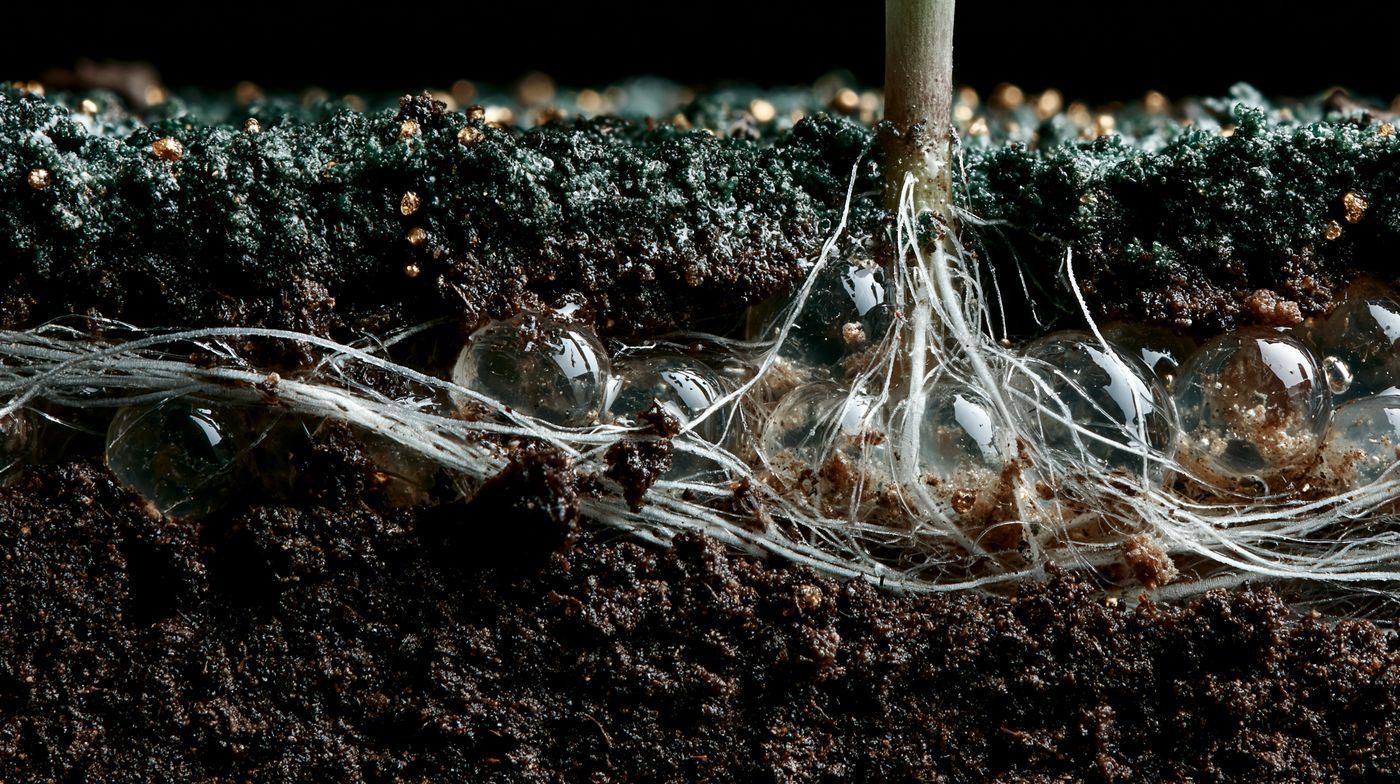
Dry cellulose granules go into the root zone. From there, the polymer network does the work — absorbing, storing, and releasing water on the plant's schedule instead of yours.
Dry cellulose granules are mixed into the soil or root zone at planting or transplant.
Granules take up irrigation or rainwater — along with dissolved nutrients.
Water is held as a gel inside a cross-linked polymer network, right where roots reach.
As the root zone dries, moisture is released gradually back to the plant.
On the next watering cycle the granules re-absorb — and the cycle repeats.
The product
Dry cellulose granules — the reservoir before water.
Why growers switch
Cellulose-based, it breaks down naturally in the soil over time — no microplastic, no persistent residue left in your substrate or your product.
By retaining water in the root zone and releasing it gradually, Canosis reduces how often you need to irrigate — and how much water each cycle takes.
A drop-in substitute where perlite is banned or restricted — Colombia, Thailand, and other cultivation markets need an alternative. Canosis is a biodegradable one.
Steadier root-zone moisture means less drought stress between waterings. Better water management is one of the most direct levers on yield.
Why it matters
Water and the labor to deliver it are among the largest recurring costs in commercial cultivation. Fewer irrigation cycles compound directly into operating margin.
Markets like Colombia and Thailand restrict perlite in cultivation. Operations there need a substrate amendment that regulators accept — and that performs.
Every dry-back past the plant's comfort zone costs growth. A reservoir in the root zone smooths the curve between waterings.
Evidence
Canosis is produced by ANT Systems on patented cellulose polymer technology — the same production line, purpose-branded for cannabis cultivation.
Presented at Mary Jane Berlin, June 2026, with positive validation from professional and home growers. Production is ready; launching from a UK base.
Cellulose-based: it breaks down in the soil over time, with no microplastic or persistent residue in the root zone.
Water-use reduction is being measured right now, in open-field trials. The numbers publish when the data does.
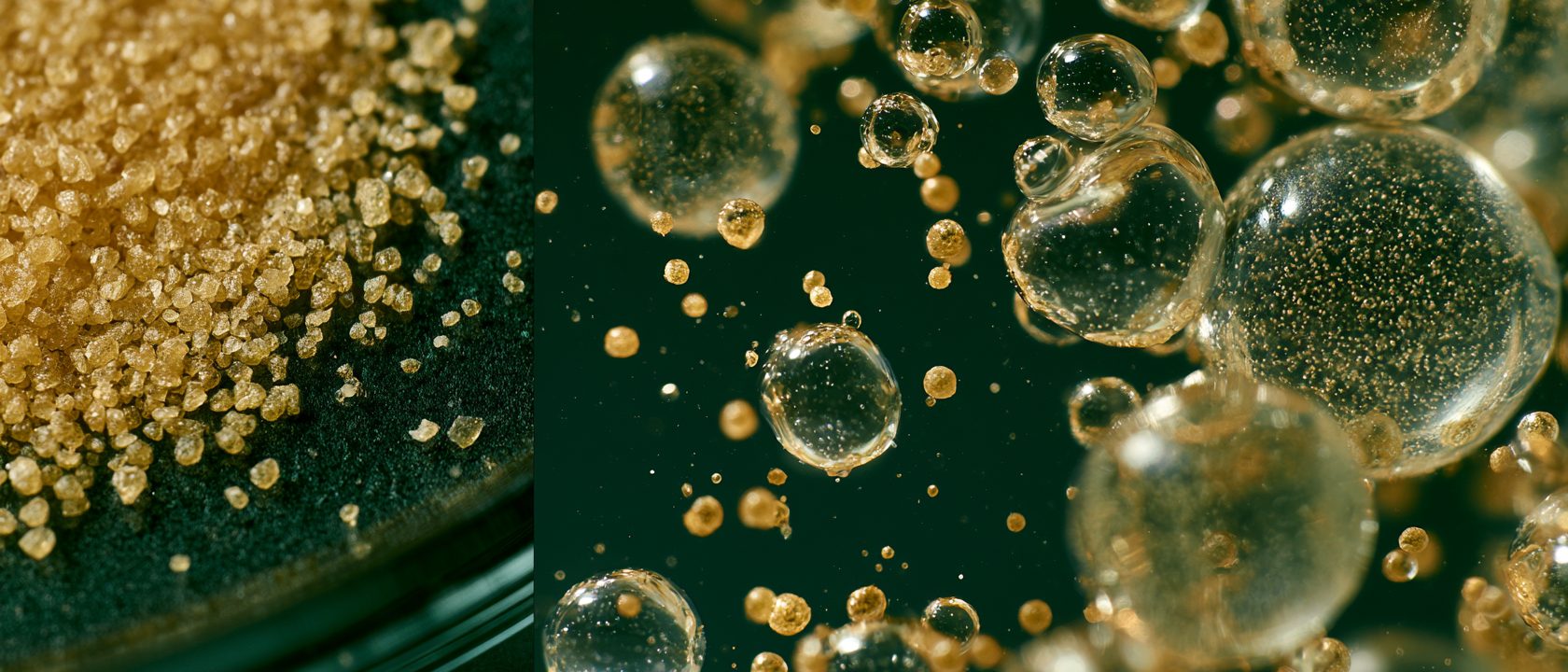
Dry, then charged
Same granules, one watering apart. This is the reservoir your roots draw from.
For commercial growers
Tell us about your operation and we'll send a sample with dosing guidance for your setup — soil, coco, or soil-less.
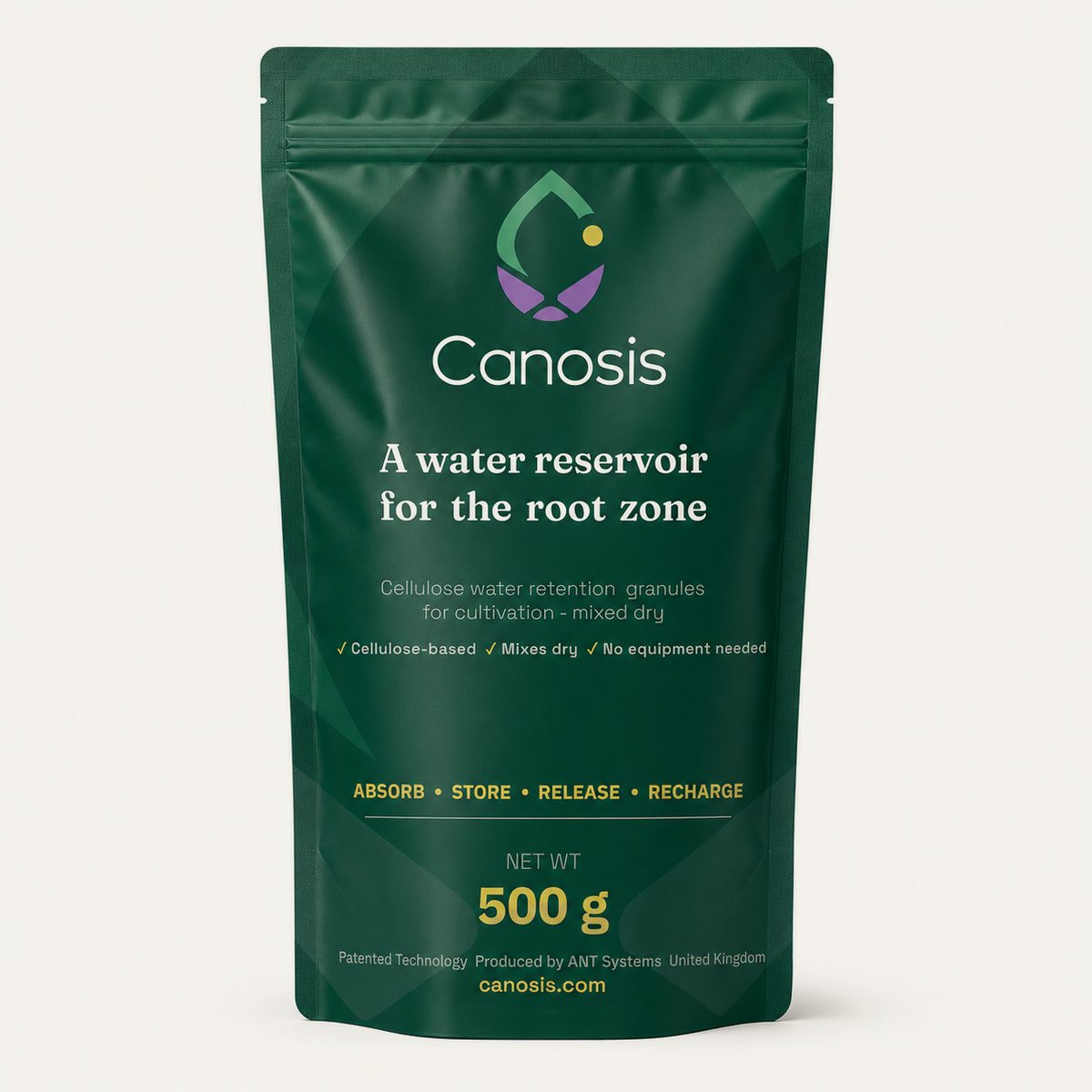
Growing at home?
Same granules, home-grow pack sizes — no forms, order directly.
Coming soon on Amazon
Want it at launch? Drop a line to sales@canosis.com and we'll let you know.
Common questions
A cellulose-based superabsorbent polymer in dry granule form. Mixed into the root zone, it absorbs irrigation water, stores it as a gel, and releases it gradually as the substrate dries — then recharges on the next watering.
It works across soil types and is usable in soil and soil-less / hydroponic setups, including coco. Dosing guidance is provided per setup with each sample.
Yes. Canosis absorbs water together with dissolved nutrients and is compatible with normal fertilizer and nutrient programs — no changes to your feed schedule required.
Being cellulose-based, it biodegrades in the soil over time, leaving no microplastic or persistent residue. There is nothing to remove or dispose of.
Canosis is produced by ANT Systems on its patented cellulose polymer technology — the same factory-ready product line, branded and optimized for cannabis cultivation.